The manufacturer behind SKWEIT®
SKWEIT® is a brand of Suzhou Purple Core Instant Purification Technology Co.,Ltd. — the company that designs, manufactures and holds the certification for the ZXSJ-UVC series of in-line UVC water sterilizers. The brand is registered in the United States; the products reach the market through authorized distribution. This page sets out who does what, what the factory actually makes, and how to verify the credentials behind it.
Sourcing, distributing or rebranding?
Pricing, MOQ, sample and OEM terms — see supplying & OEM.
Running a due-diligence check?
Certificate references and what we do not hold — jump to certification.
Everything else on this site, by topic
The top menu is kept deliberately short. Every other section of this site is listed below and links straight into it — nothing that was previously in the menu has been removed.
Solutions
Where an in-line UVC stage sits in an RO, under-sink or well-water train — and where it does not belong.
Water problems
Symptoms that show up after treatment: coliform, iron bacteria, tank regrowth, biofilm, sulfur smell, PFAS, lead, nitrate.
Technology
How in-line UVC works, how UVC-LED compares with mercury-lamp UV, and what a dose figure does and does not tell you.
Compliance
PFAS at point of use, the US rule timeline, and what is enforceable now against what starts in 2029.
Guides
Installation, and the feed-water limits that govern the warranty.
Certifications
The conformity certificate, EPA establishment registration and trademark registration held for these models, quoted by number — and what is not held.
Blog
How to read a supplier certificate, what a UV dose figure means, the US PFAS timeline, quartz-sleeve fouling — and where new pieces are published.
FAQ
Direct answers on flow, fittings, power, service life and feed water.
Installations
How these units are deployed in the field.
Documents & datasheets
The series data sheet, what ships with an order, and what is issued per order rather than published.
Support & service
Lamp and sleeve replacement, and what sets each service interval.
Three questions buyers ask before the first order
When a distributor or an OEM buyer vets a supplier, the questions are almost always the same: who actually makes it, who owns the brand, and who answers if the paperwork turns out to be wrong? On this product line the answers converge on a single company, and that is deliberate.
| Role | Entity | What it means for you |
|---|---|---|
| Manufacturer, brand owner and certificate holder | Suzhou Purple Core Instant Purification Technology Co.,Ltd. 苏州紫芯瞬净科技有限公司 |
Designs the product, runs the process, and is the named holder on the CE certificate and the EPA establishment registration. There is no intermediary between the brand and the certificate. |
| Authorized distributor (non-exclusive) | Zishen International Trade (Xuzhou) Co.,Ltd. 紫深国际贸易(徐州)有限公司 |
Handles export sales, this website and order correspondence. The appointment is non-exclusive: territory and exclusivity are open to discussion on programme terms. |
| Registered trademark owner | Suzhou Purple Core Instant Purification Technology Co.,Ltd. | SKWEIT® is registered in the United States (Reg. No. 8,213,072, International Class 11). The mark is owned by the manufacturer, not licensed in from a third party. |
Certification that is held by one company, while the brand on the box belongs to another, is where most supply-chain surprises come from. Here the manufacturer, the brand owner and the certificate holder are the same legal entity — so a certificate query, a trademark query and a factory query all land in the same place.
What this manufacturer makes — and what it does not
The company does one thing in this category, and it is deliberately narrow: in-line UVC sterilizers that treat water which has already been purified. Knowing the edge of that scope saves buyers from specifying the wrong component.
| Made here | Not made here |
|---|---|
| In-line UVC-LED water sterilizers — post-treatment units for RO and under-sink systems | Standalone water purifiers — no filter element, no sediment or chlorine removal |
| Stainless-steel housings with sealed cable glands and quick-connect fittings | RO membranes, pressure tanks, pumps or booster assemblies |
| Flow-actuated drive and control, with a three-colour status indicator | Whole-house or point-of-entry treatment systems |
| OEM / ODM configuration of fittings, cable length, packaging and accessories | Water softening, desalination or PFAS removal of any kind |
Models are identified as ZXSJ-UVC-1GPM and ZXSJ-UVC-3GPM. Flow descriptions such as 4 LPM or 10 LPM that appear in catalogue material are descriptions of flow rate, not model numbers — the certification is issued against the model designations above.
What a buyer can check before placing a first order
Capability is usually presented as headline numbers — floor area, headcount, annual output. On their own those figures are worth very little, because a number with no source attached is a slogan. What follows is the set of facts about this product line, each with the route by which it can be checked — beginning with the manufacturer's own figures for the line.
| Dimension | What is in place | How it is checked |
|---|---|---|
| Models in production | ZXSJ-UVC-1GPM and ZXSJ-UVC-3GPM | The same designations appear on the CE certificate and the EPA establishment registration — one model identity across all three documents. |
| Certification held | CE conformity certificate DPCW/01068/06/KA/26 EPA establishment registration 105777-CHN-1 |
Quote the reference numbers to the issuing bodies — INTERCERT Global (Warsaw) for the CE certificate, the US EPA for the establishment registration. |
| Trademark | SKWEIT® — US Reg. No. 8,213,072, Int. Cl. 11 | Searchable in the USPTO register. The recorded assignment (Reel/Frame 9304/0180) shows ownership sitting with the manufacturer, not licensed in. |
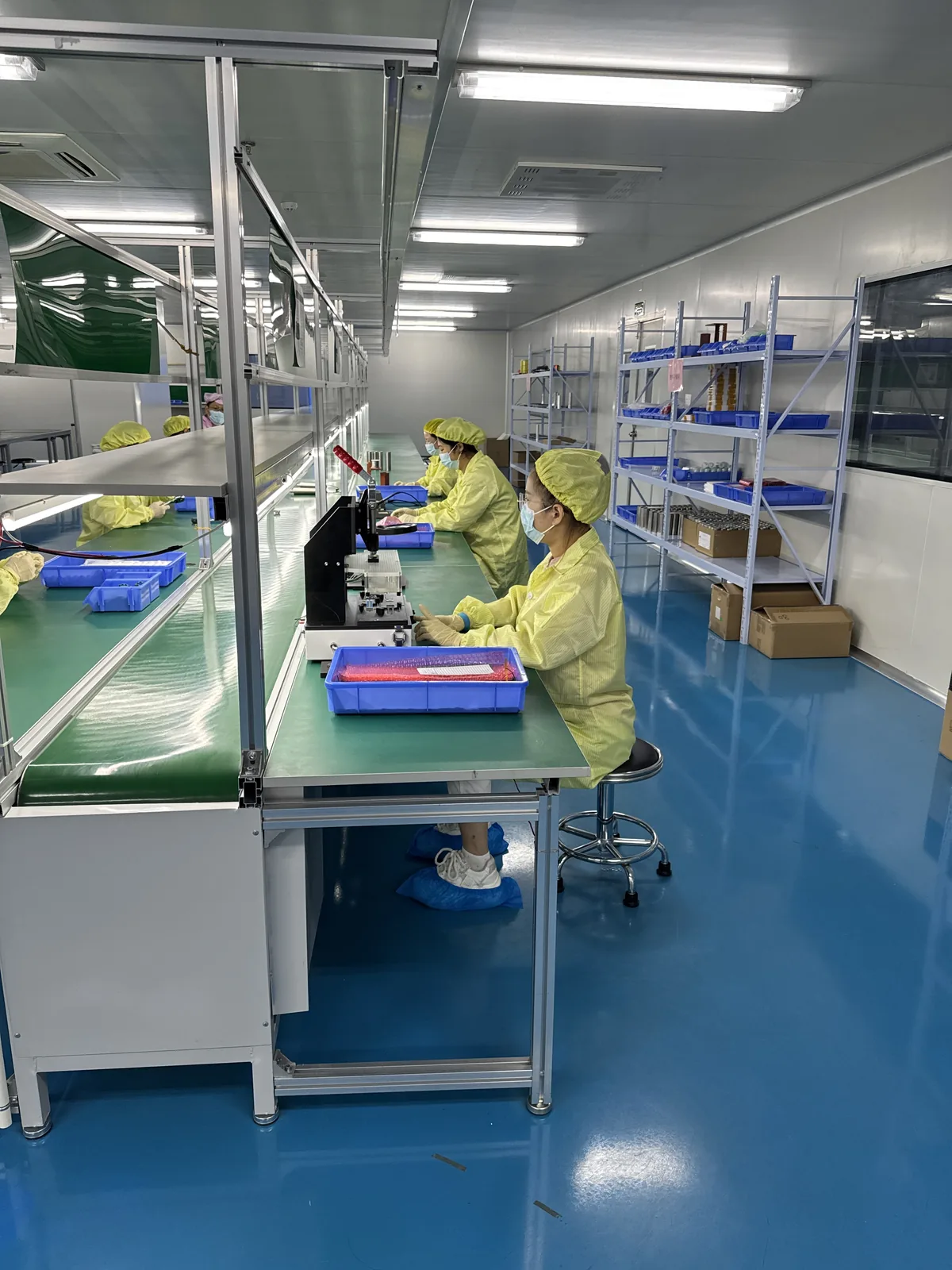
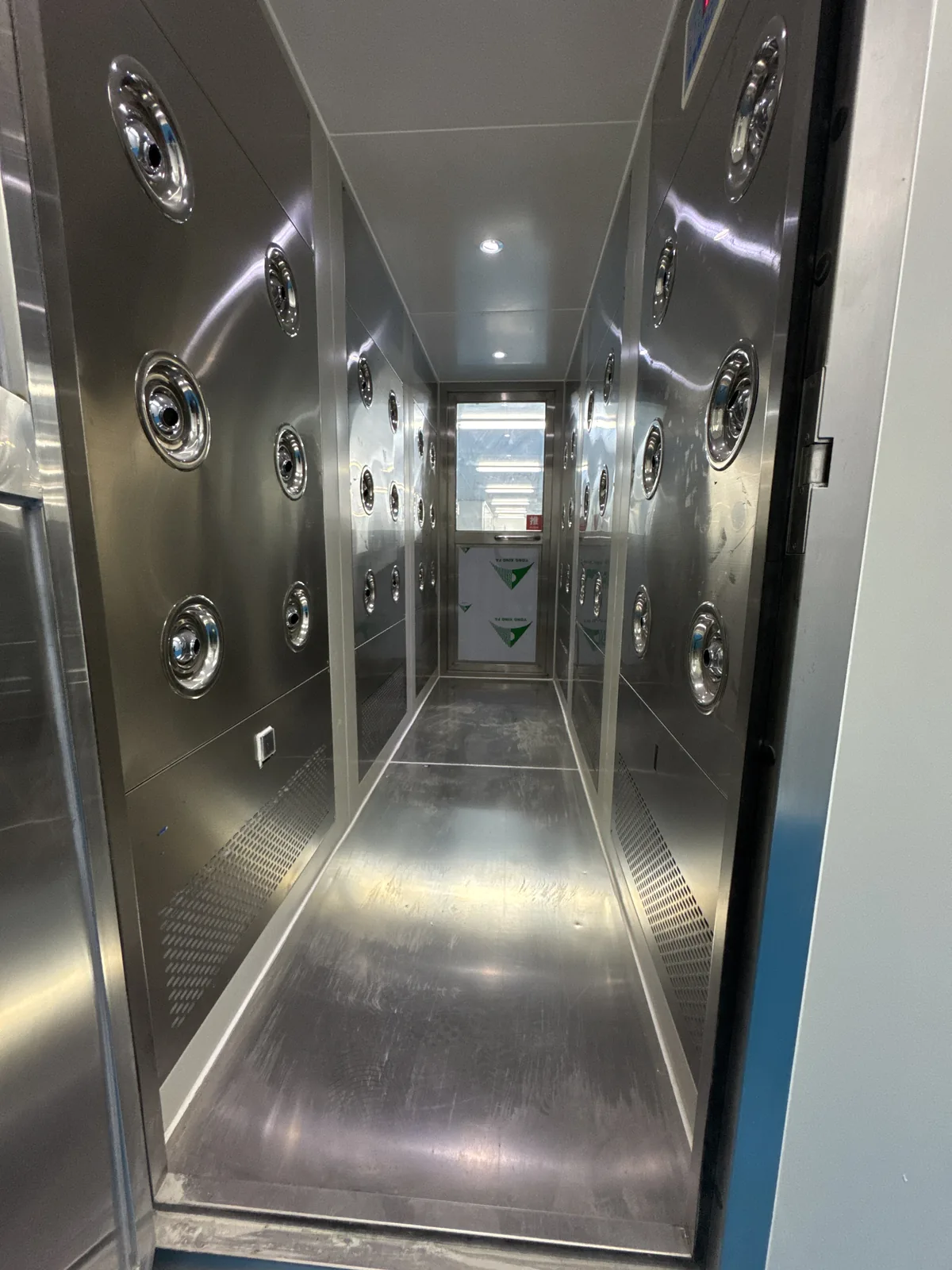
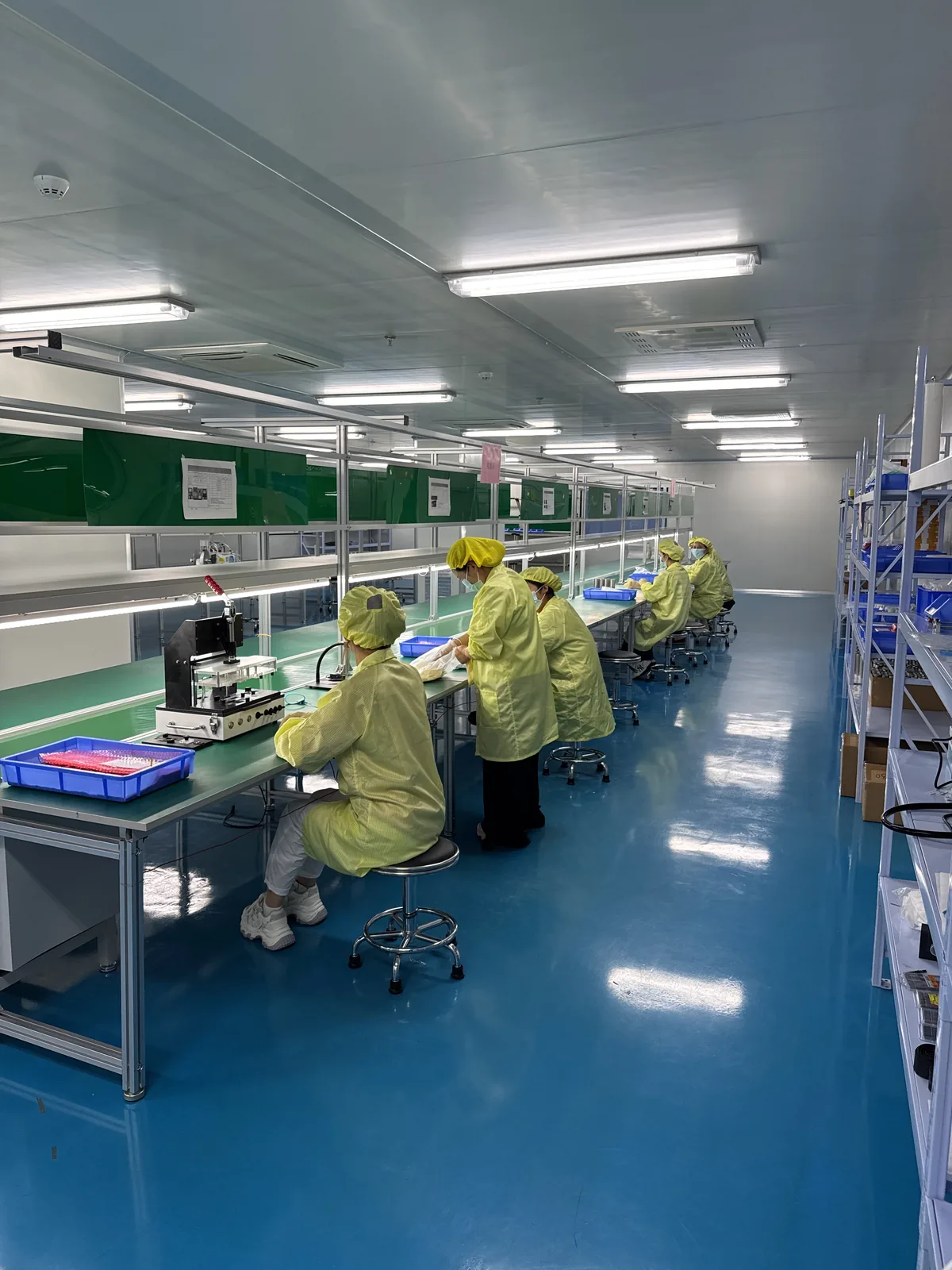
| Controlled assembly | Air-shower entry into the controlled area, and assembly at stations worked by cleanroom-garmented operators | Photographs on this page; the sequence is described under manufacturing below. |
| Wetting before release | Assemblies are wetted and operated on a pressure and flow rig — not merely checked electrically | Photographs on this page. A unit that never sees water has not been tested as a water treatment component. |
| Fixturing | Purpose-built fixtures hold sub-assemblies for checking before they join the main unit | Photographs on this page. |
| Metalwork | Stainless-steel components are formed at the production facility rather than bought in finished | Photographs on this page. |
| Release discipline | Each unit is released against an inspection record that stays with production | Ask for the record format to be issued with your quotation. |
| OEM / ODM scope | Fittings, cable and plug standard, packaging and accessory kit contents | Scope and terms are set per programme. Model designations do not change — see supplying & OEM below. |
Manufacturing capability, in figures
The figures below are the manufacturer's own for the line that builds the ZXSJ-UVC series. They describe the space the process occupies, the number of assembly lines that carry it, and the output the line is stated to reach.
| Workshop | Floor area | What the space is used for |
|---|---|---|
| Assembly workshop | 220 m² | Assembly workstations and the material staged at the line side. |
| Pressure and leak test workshop | 50 m² | Wetting and pressure and flow testing of assemblies. |
| Incoming and final inspection | 30 m² | Goods-in checks, and final inspection against the release record. |
| Raw material and finished-goods warehouse | 100 m² | Incoming material stores and units held pending despatch. |
| Electrical and burn-in test workshop | 30 m² | Electrical testing and burn-in of assemblies. |
| Total | 430 m² | Total workshop and storage space covered above. |
Figures as provided by the manufacturer, September 2026.
The floor areas, the assembly-line count and the monthly output above are the manufacturer's own figures, published with the source attached rather than presented as independently audited facts — no third-party audit of them is claimed. What they establish is the scale of the operation behind the product. They are not evidence of product performance, and no performance conclusion should be read into them; the photographs elsewhere on this page remain process records rather than a premises survey. The output figure is the monthly volume that can be allocated to this product line, not the total output of the facility: this line also runs other work. The volume held for your particular order, the lead time and the minimum order quantity depend on your schedule and are re-confirmed in the quotation.
From incoming material to an inspection record that stays with the unit
The sequence below describes the production and quality-control practice applied to this product line. It is written as process, not as a performance claim: what follows describes how units are built and checked, not what the units achieve in service.
- Incoming material control. Housings, fittings, glands, drivers and LED assemblies are received into line-side stores and checked before release to assembly.
- Assembly in a controlled environment. Units are built at workstations in a cleanroom-controlled area, with operators in cleanroom garments.
- Water test. Assemblies are run on a dedicated pressure and flow test rig — the unit is wetted and operated, not merely checked electrically.
- Final inspection and release. Each unit is released against an inspection record; dimensional checks use calibrated instruments at the bench.
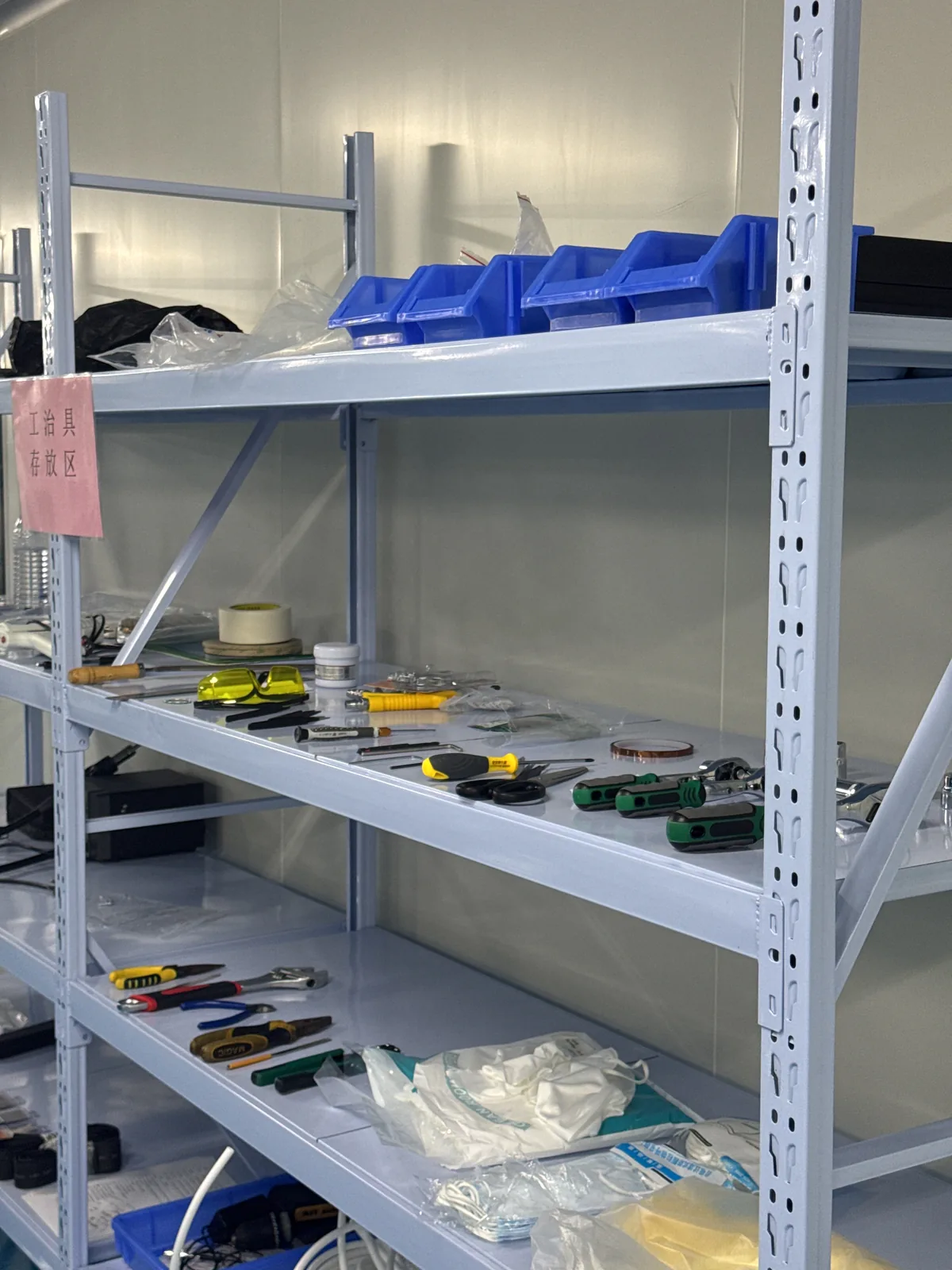
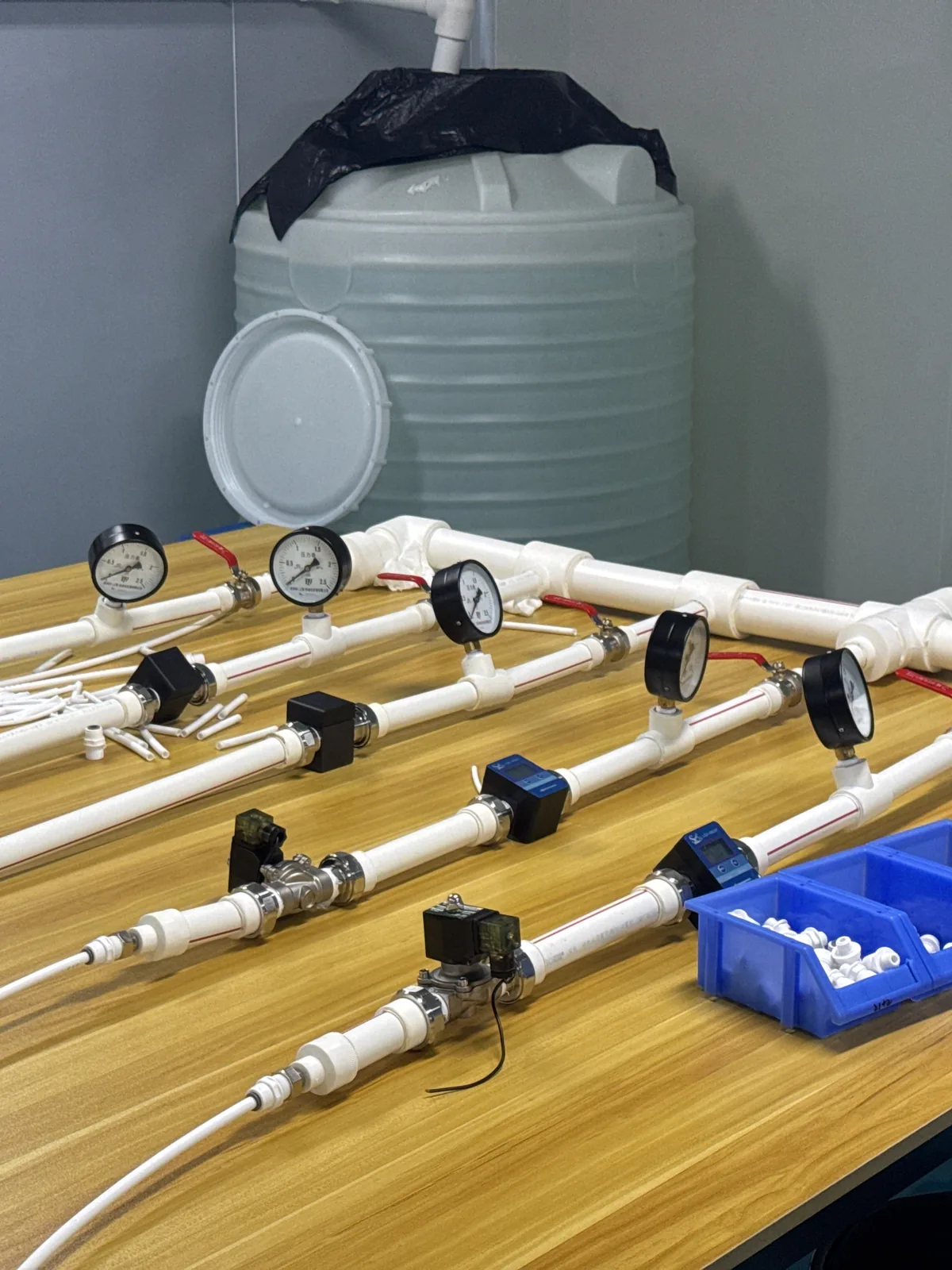
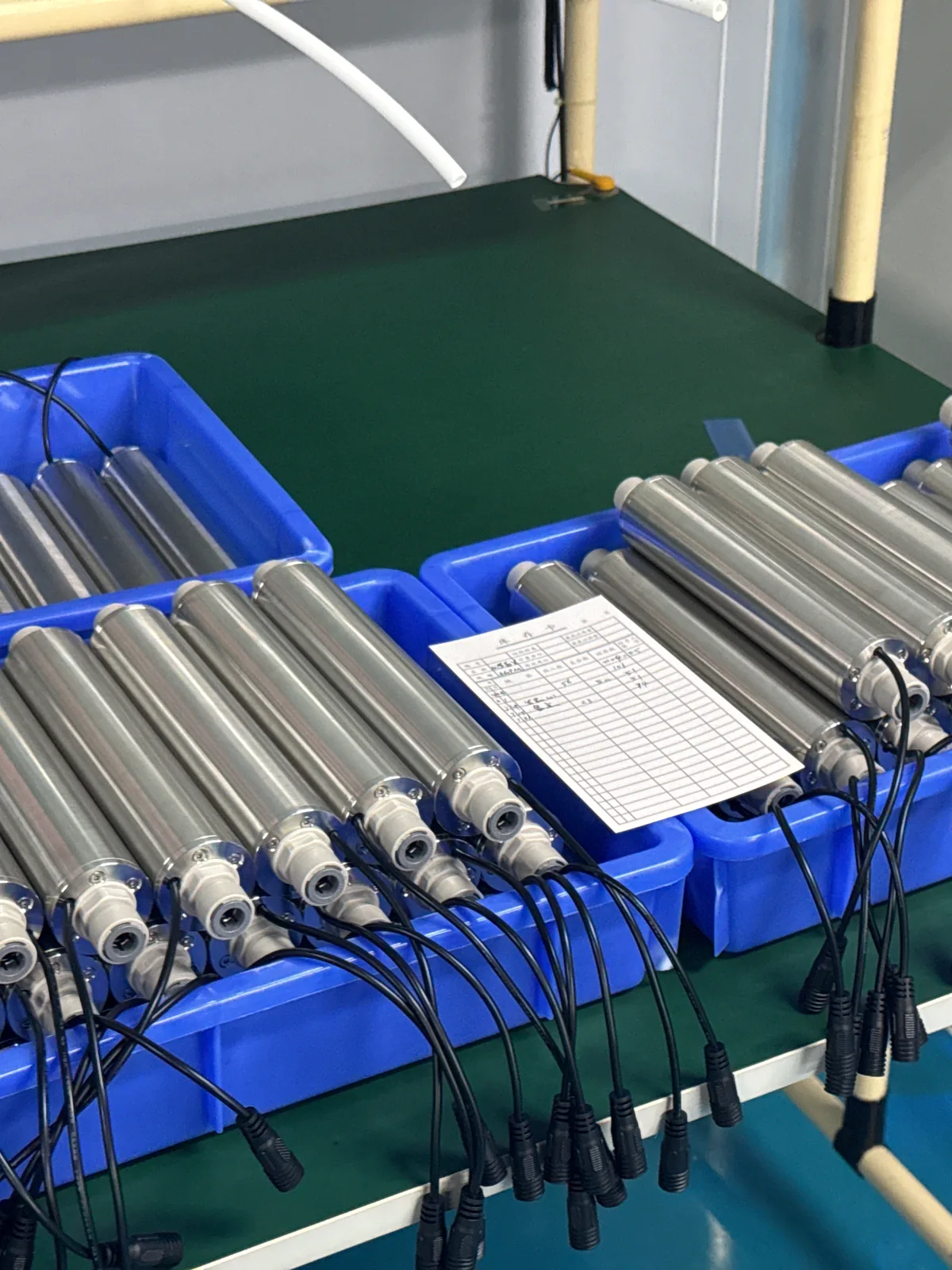
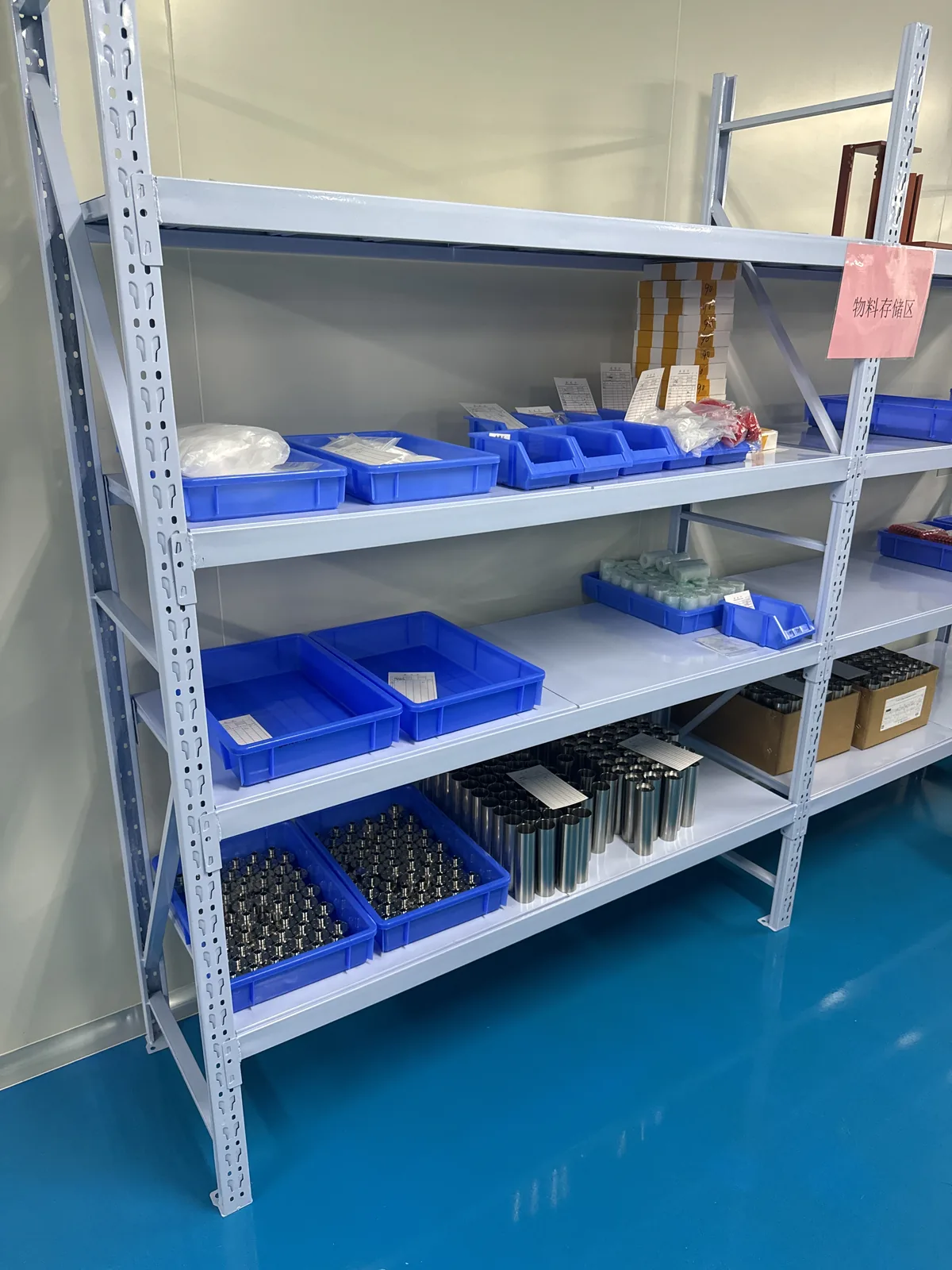
An inspection record is only useful if it can be traced back to a unit. Records are held against production rather than filed as a formality — which is what makes a complaint investigable months later instead of arguable.
What stands between a certificate and the unit in the carton
A certificate covers a design. It says nothing about the unit that arrives in the box. What decides whether units come out the same way twice is more ordinary: a fixture that holds a sub-assembly in the same position every time, tooling that forms a component to the same dimension every time, and a check on a real system rather than on a bench rig alone.
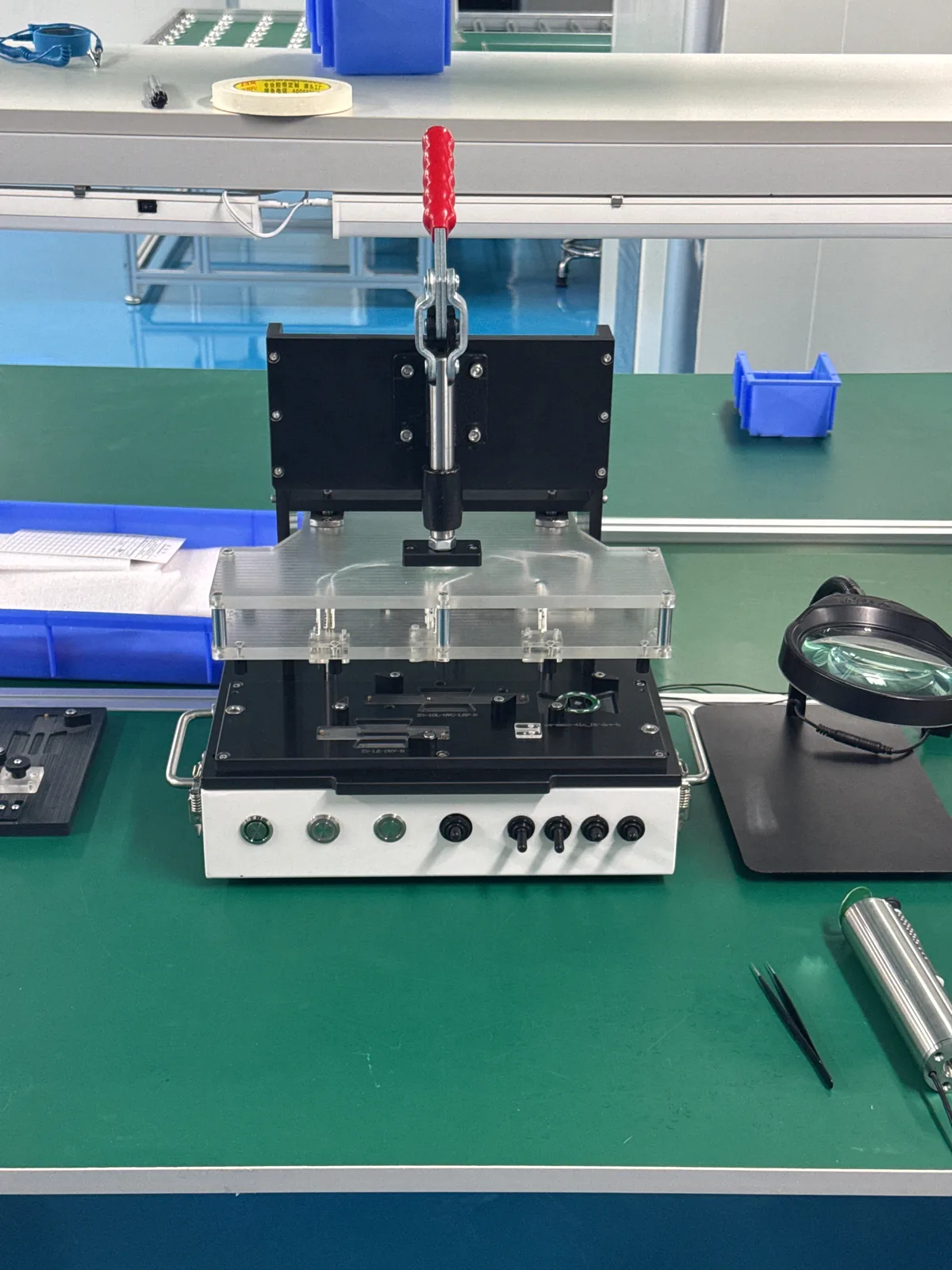
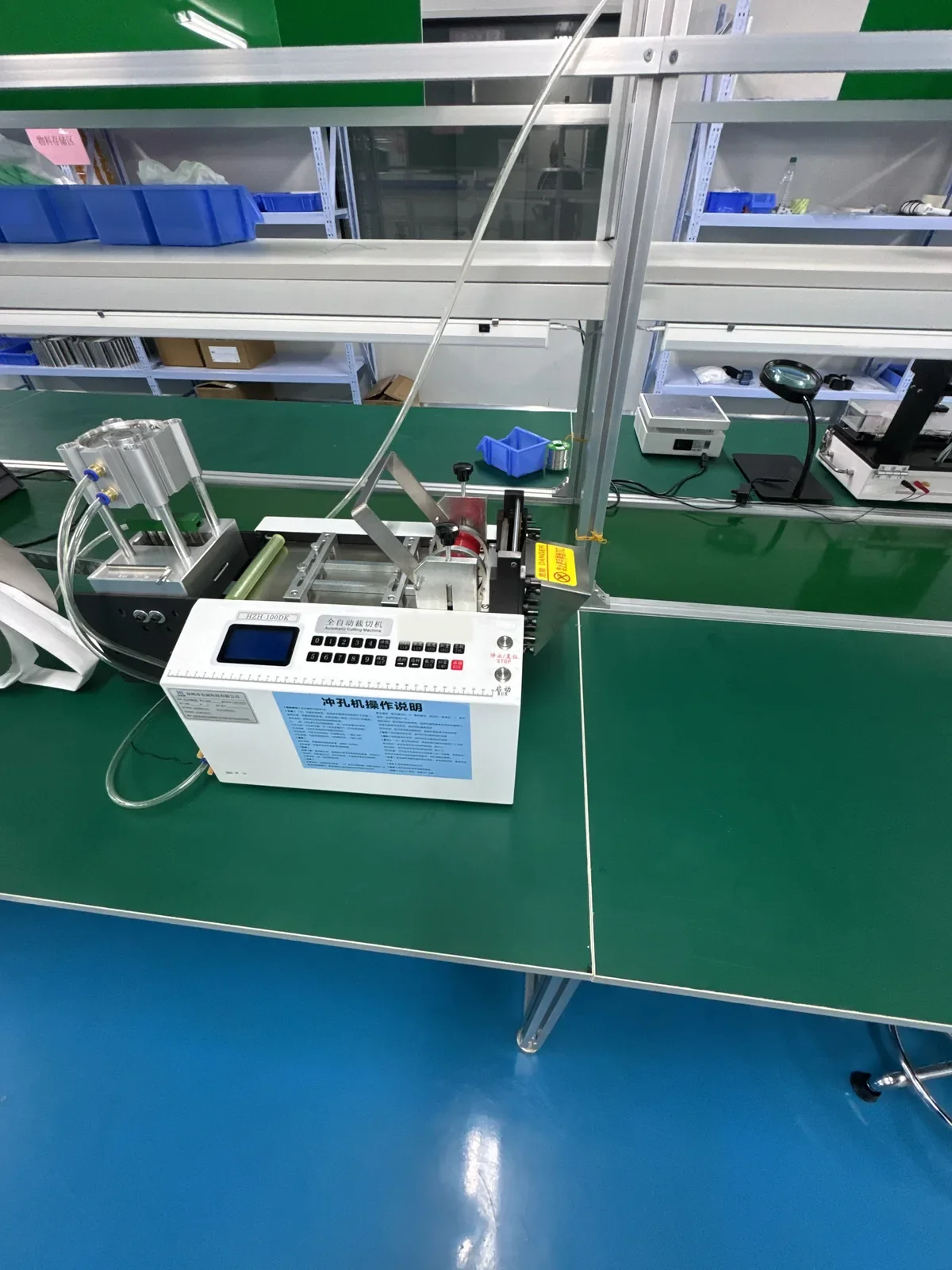
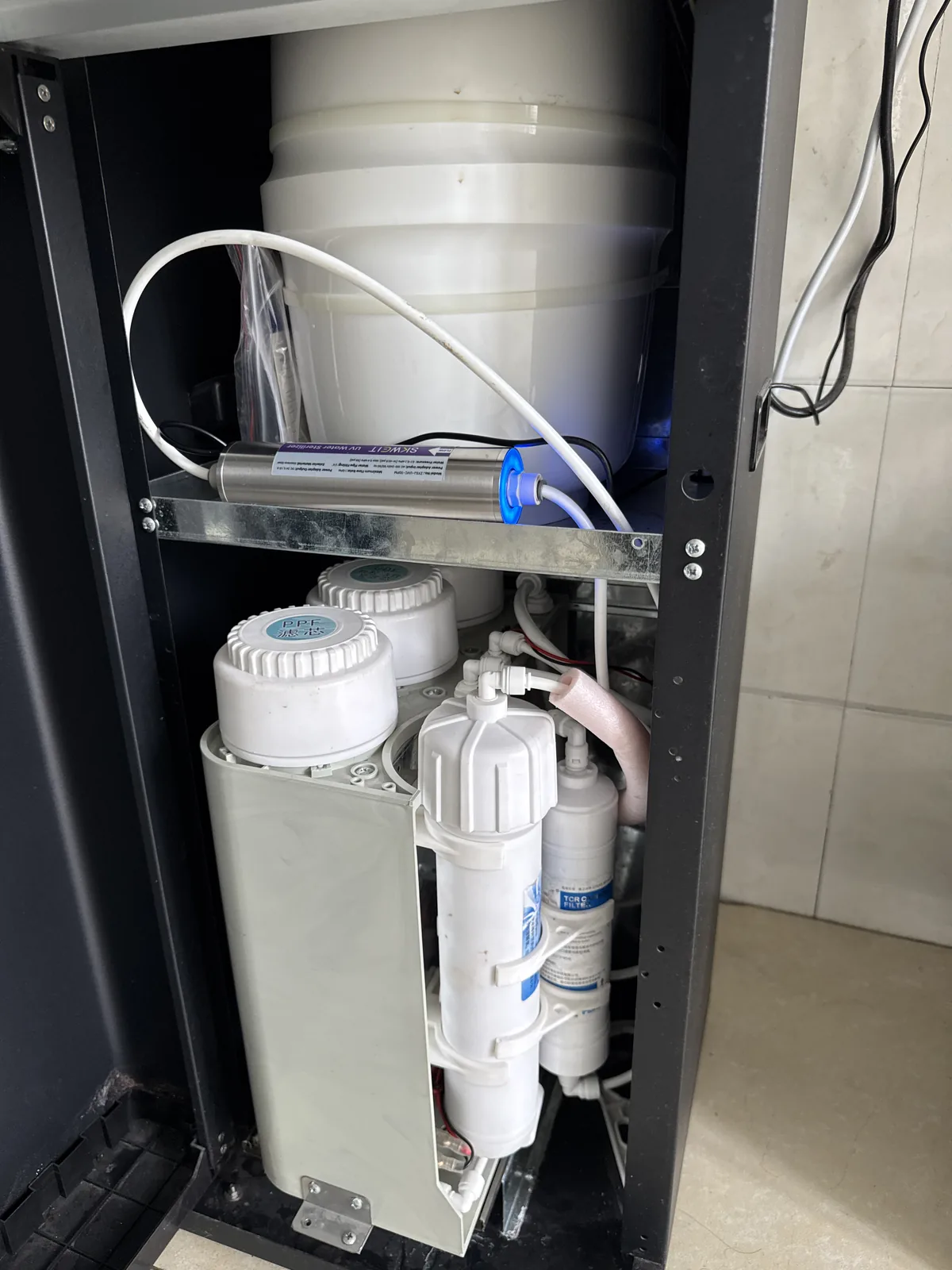
They document tooling and process as applied to this product line. They are not performance evidence — none of them establishes a disinfection result. Performance questions, including what the stage does not achieve, are answered on the technology and product pages, with the limits stated alongside the claims.
What the quality routine actually covers
Quality systems are usually described in the language of certificates. It is more useful to name the things the routine covers — because reviewed items are the ones that change:
Quality policy
Efficient management · continuous innovation · customer focus · continuous improvement — used as review criteria, not as a slogan.
Incoming & in-process problems
Defects found at goods-in or on the line are logged against the production record, so a fix is traceable to the shift and the part.
Customer complaints
Complaints are tracked through the same routine as internal defects. An issue raised by a buyer is not routed somewhere else and forgotten.
A working routine is not a certificate. It shows that defects get logged, corrected and closed — process discipline, which is a different kind of evidence. Certification questions are answered on the certifications page, where each item is quoted by its reference number alongside the model it covers.
What the production floor looks like
Cleanroom garments, controlled flooring and stainless-steel workstations are the visible part of the process. They are shown here without retouching, because a buyer assessing a second source is better served by the real floor than by a staged one.
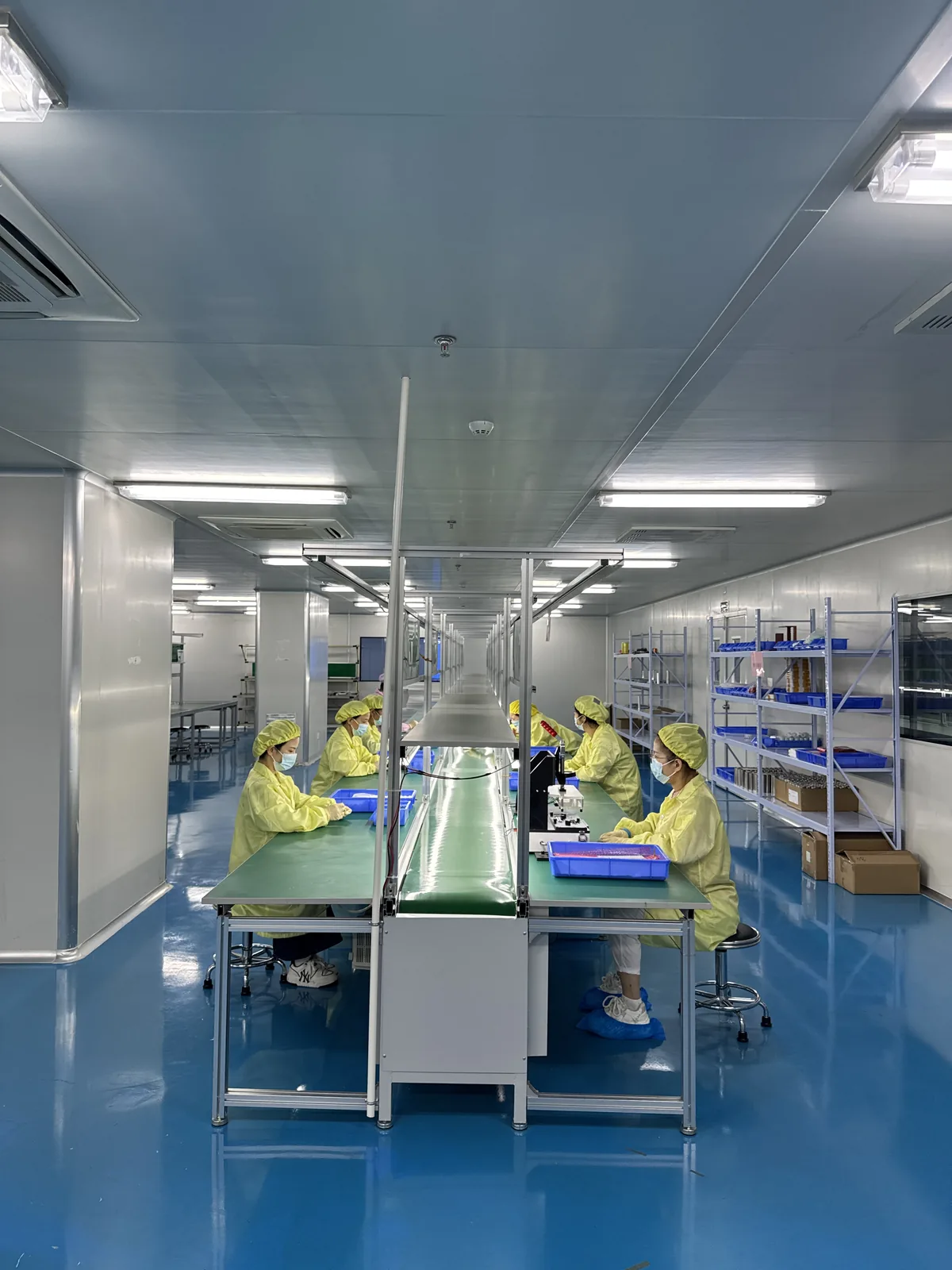
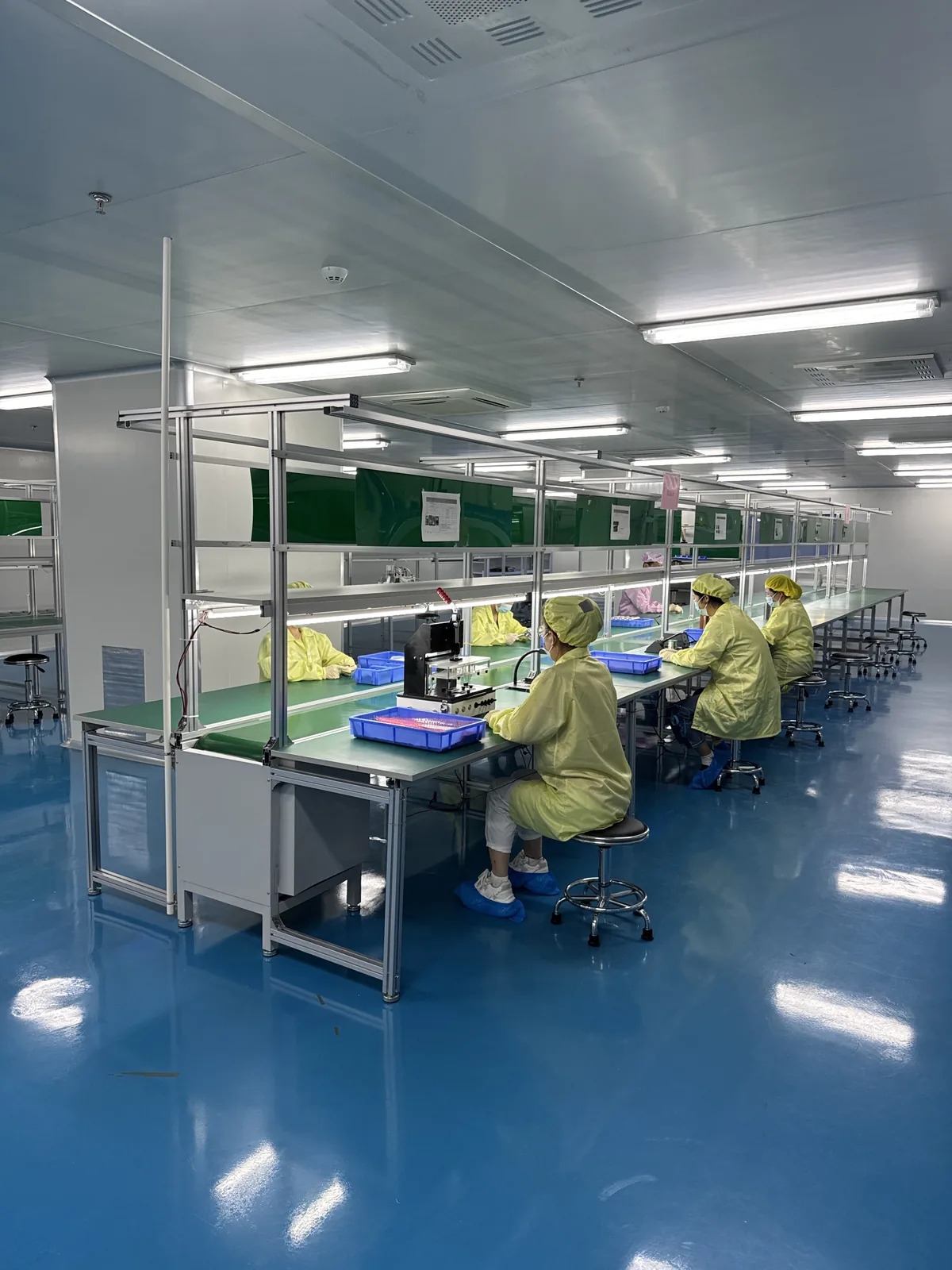
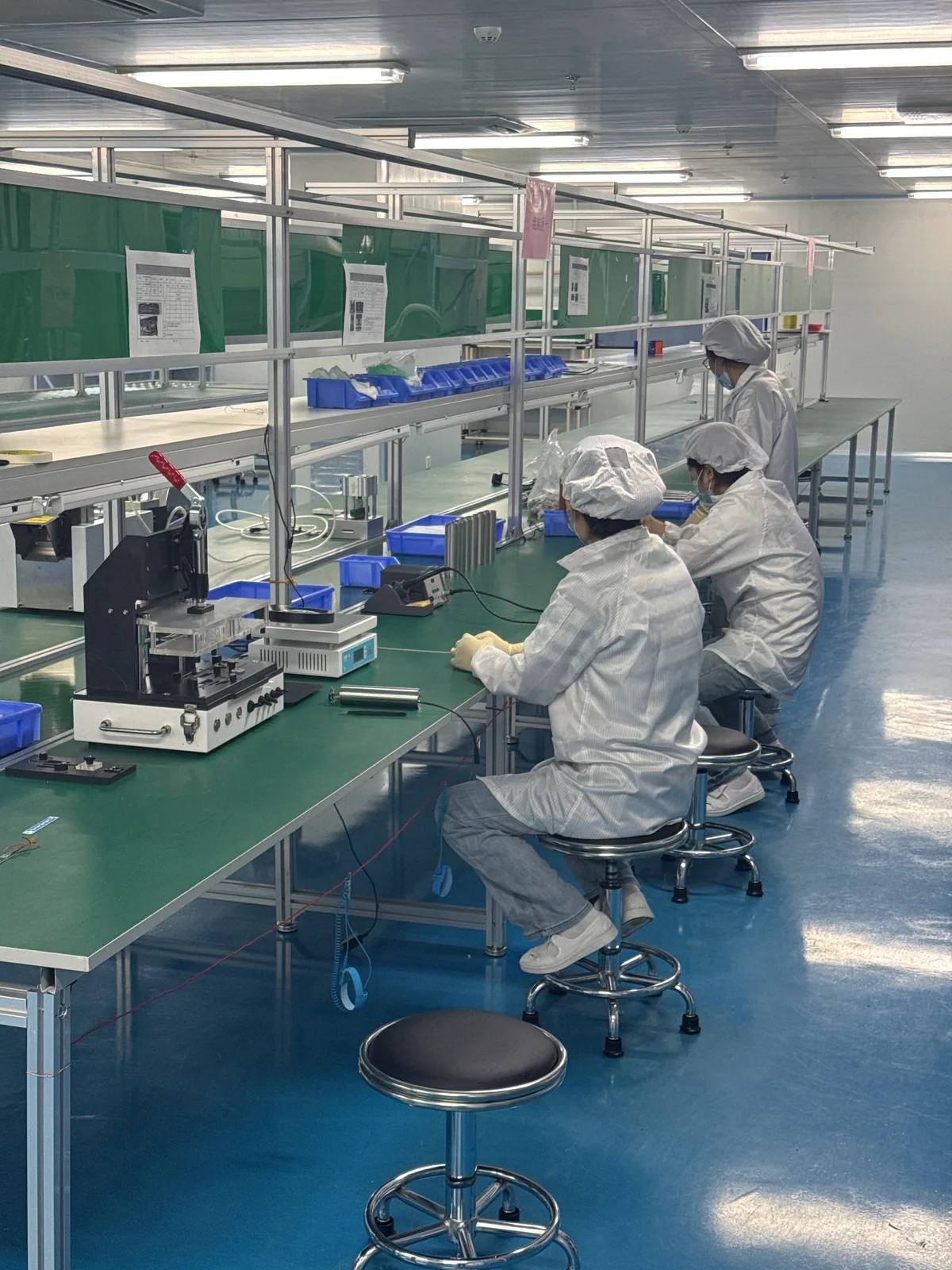
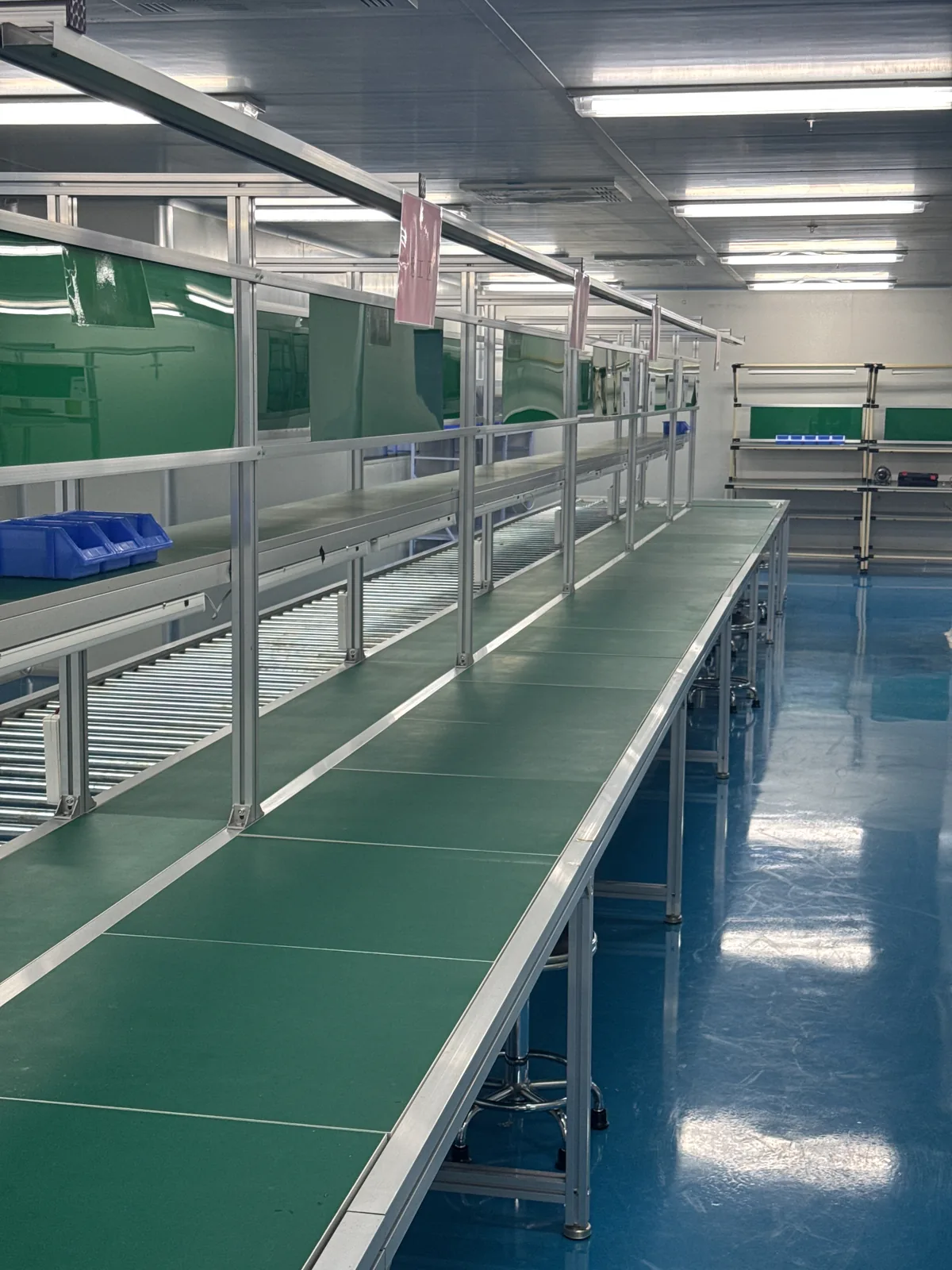
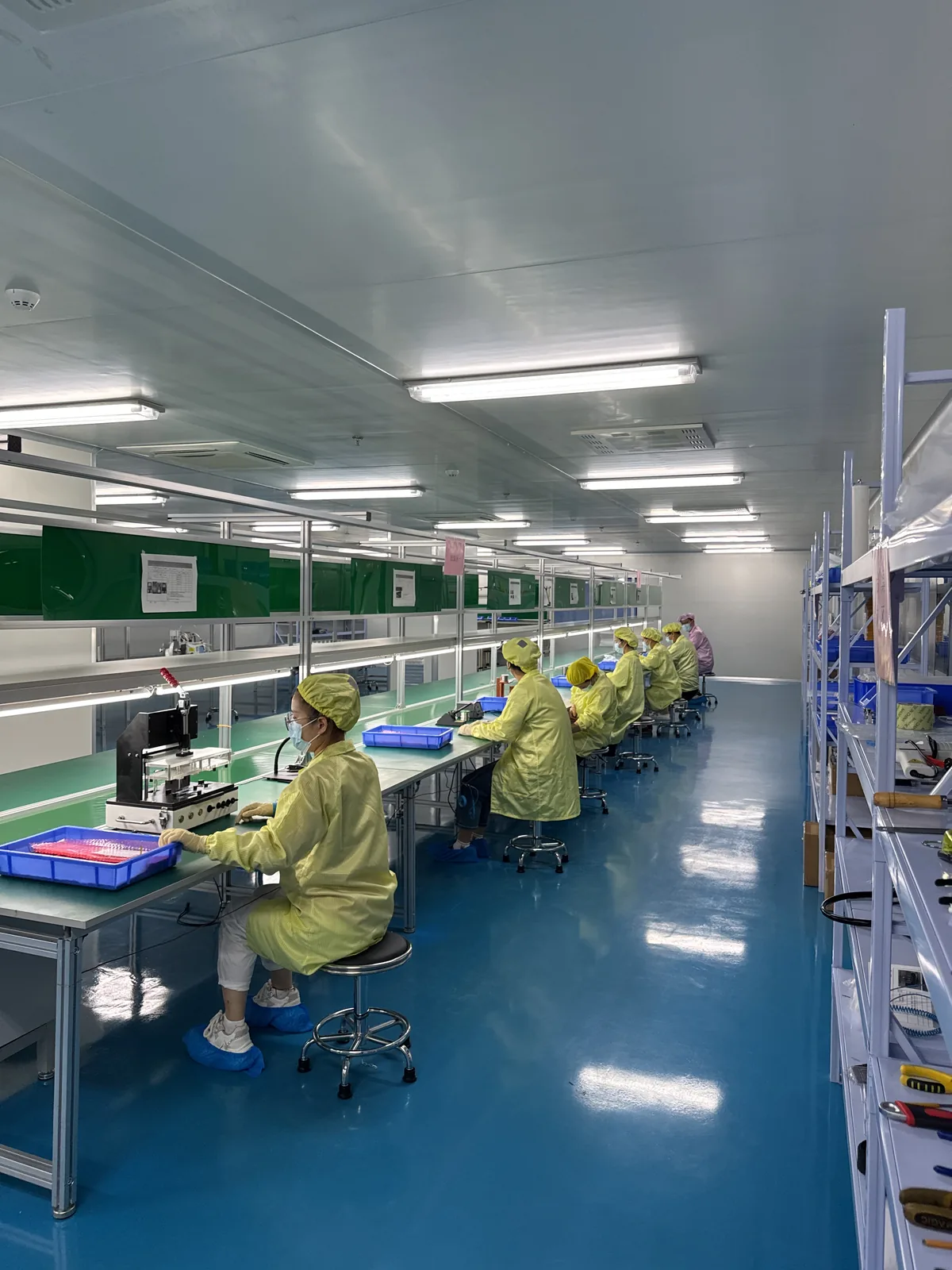
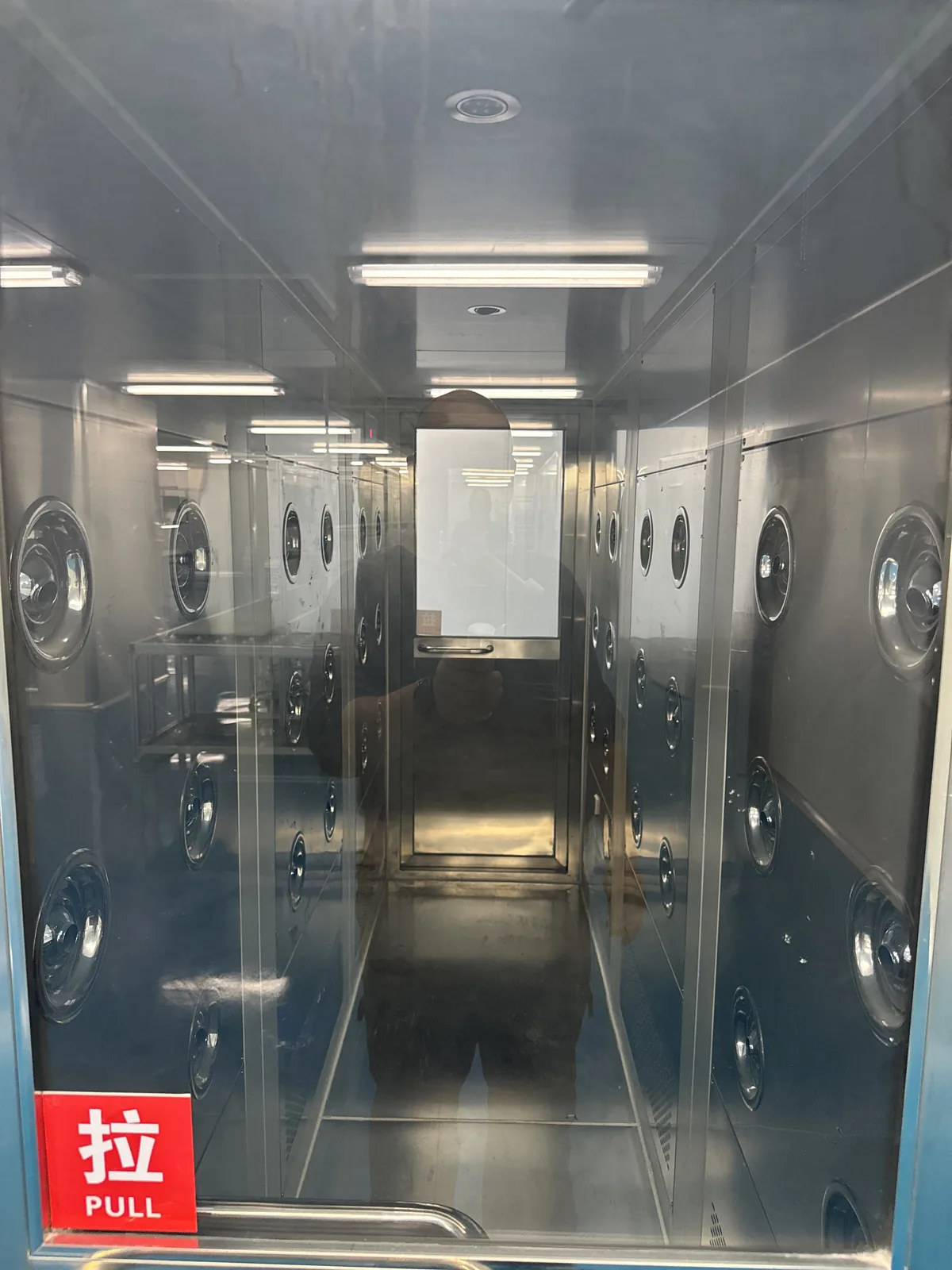
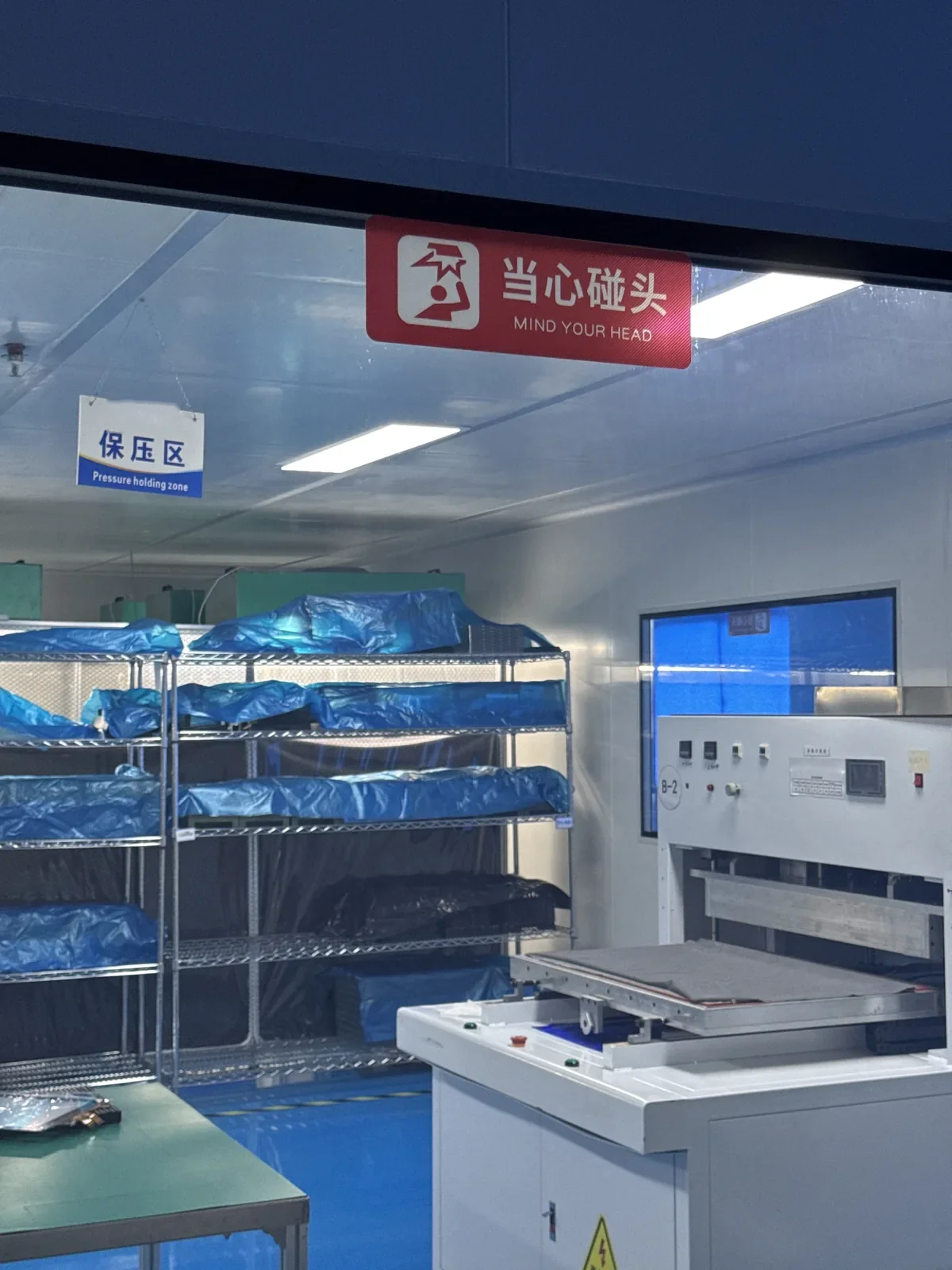
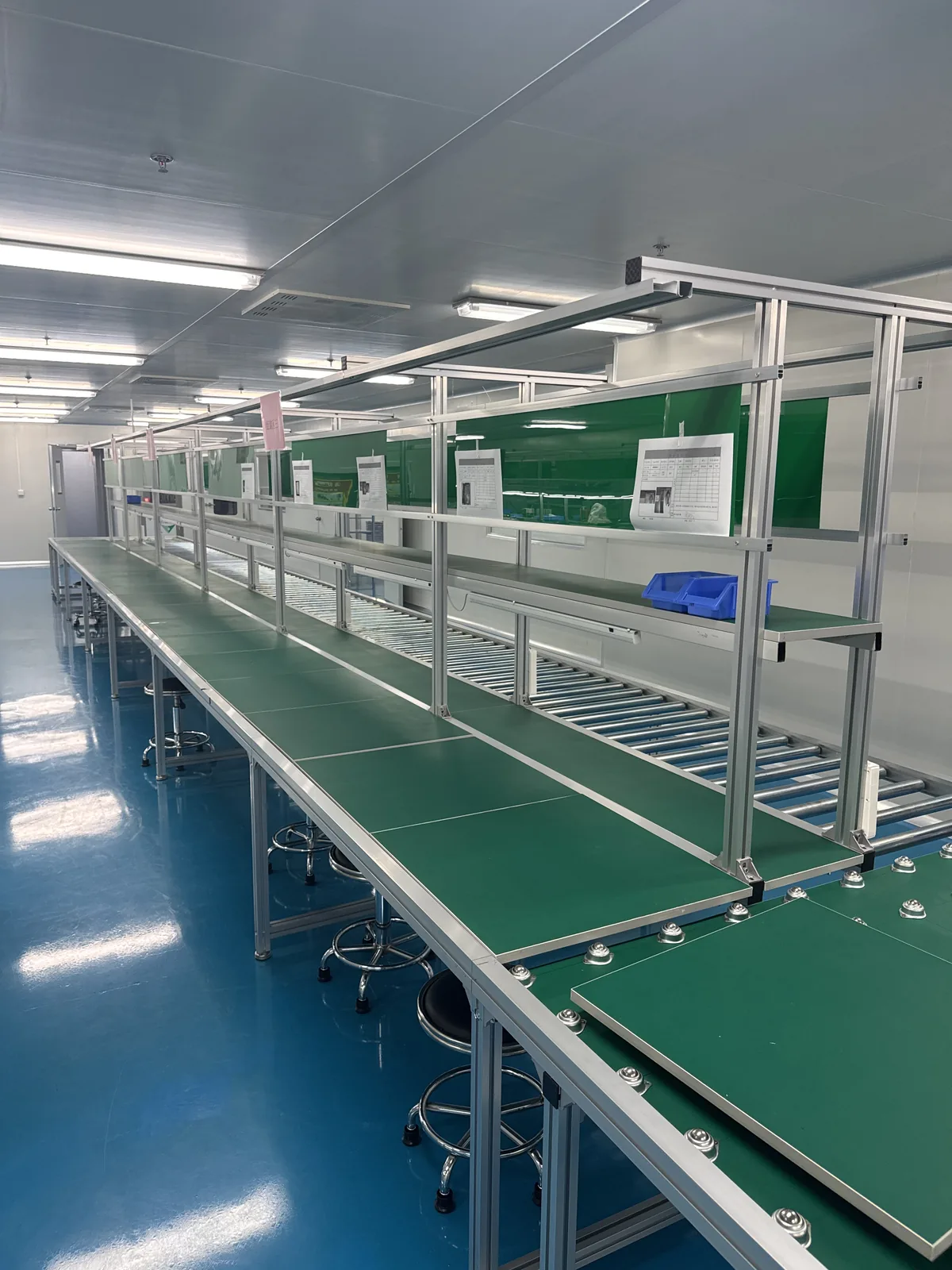
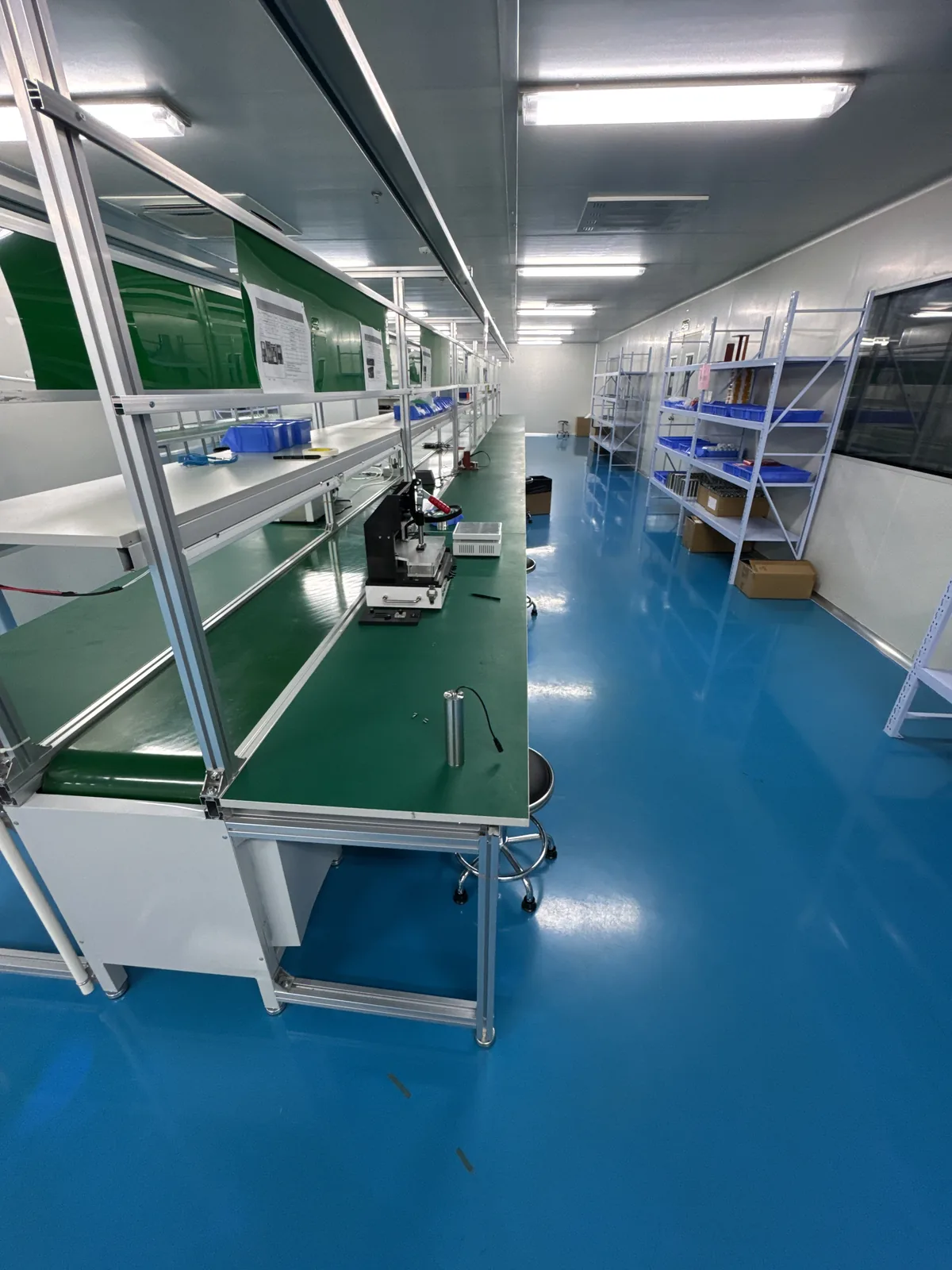
Photographs on this page are process records, taken inside the factory that supplies this product line. They show the manufacturing and quality-control steps carried out for SKWEIT® products — they document process, not premises. Production follows the manufacturer's documented process specifications and quality plan, and every unit is released against a final inspection record.
What can be configured — and what cannot
Most of the commercial envelope is negotiable. One part is not: the model designation, and with it the certification. Knowing which is which early saves a redesign later.
Configurable on programme terms
- Fittings and tubing connection — 1/4" or 3/8" quick-connect
- Cable and adapter options for the target market's plug standard
- Packaging, printing and accessory kit contents
- Private-label presentation where the programme supports it
- Commercial terms: target price, MOQ, schedule and sample quantity
Fixed — because certification is anchored to it
- The model designations ZXSJ-UVC-1GPM and ZXSJ-UVC-3GPM, which the certificates reference
- The declared flow rating and fitting size pairing of each certified model
- Anything that would change what the certification covers
| Sample supply | Available for evaluation before a volume commitment. |
|---|---|
| Documentation pack | Certificate copies, parameter table and installation manual issued with the quotation. |
| Exclusivity | Not granted by default. Distribution is non-exclusive; territory or channel exclusivity is a programme negotiation, not an assumption. |
| Contact | Enquiries through the form at the foot of this page, by email to the sales address published in the footer of every page, or on the company sales line +86 180 2176 0467 (also WhatsApp). Distribution is non-exclusive and arranged by market. |
What is on file — with the caveats that go with it
Certification is quoted by reference number, not by badge — a number can be checked, and the document behind it is what a buyer actually relies on. Three items are held, covering the models ZXSJ-UVC-1GPM and ZXSJ-UVC-3GPM:
CE — DPCW/01068/06/KA/26
EU conformity, Low Voltage Directive and EMC, issued by INTERCERT Global (Warsaw) for the models ZXSJ-UVC-1GPM and ZXSJ-UVC-3GPM. The certificate holder is the manufacturer.
EPA Est. No. 105777-CHN-1
A facility registration under FIFRA §7 — it registers the establishment, not the product, and it is not a product certification.
US Reg. No. 8,213,072
SKWEIT® registered in the United States, International Class 11, covering water purification installations and water filters. Owned by the manufacturer.
Full credential list, with the document behind each number
No product certification is claimed for the United States beyond the establishment registration above; an establishment registration must not be described as product approval. FCC, RoHS and UN38.3 approvals are not held and are not claimed. The certification documents carry a trade name that differs from the marketing brand; they were issued to the same manufacturer and cover identical model numbers. That trade name is not used as a marketing brand and has not been licensed to any party. Verification of trademark status outside the United States has not been completed, and no registration is asserted for the EU, the UK or Canada.
Both documents are model-anchored rather than brand-anchored: they are held for the two model designations above, which is what a buyer's compliance file has to match.
Talk to the manufacturer's export desk
Tell us the host system and the market you are selling into, and the first reply can be specific rather than generic.
- Models: ZXSJ-UVC-1GPM | ZXSJ-UVC-3GPM
- Credential: CE conformity certificate DPCW/01068/06/KA/26 · EPA Establishment No. 105777-CHN-1 (facility registration)
- Samples: available for evaluation before a volume commitment
- OEM / ODM: available on programme terms — model designations follow the certified series
- Documentation pack: certificate copies, parameter table and installation manual issued with quotation
Send an enquiry
Typical response within one business day.
This form is not yet connected to a mail service — the enquiry endpoint will be wired up at launch. Until then, write to sales@skweit.cn or through the contact page.
Sources and scope
5 sources
- Corporate identity and certification references: certificate originals held by the manufacturer — CE conformity certificate DPCW/01068/06/KA/26 (INTERCERT Global, Warsaw); EPA establishment registration 105777-CHN-1; US trademark registration 8,213,072 with recorded assignment Reel/Frame 9304/0180. Cited for: entity names, certificate references, trademark ownership.
- Product scope and model designations: SKWEIT® UV Water Sterilizer instruction manual, revision 01.03, and the accompanying product parameter table. Cited for: model numbering, flow rating, fitting size, declared scope of application.
- Manufacturing, tooling and quality-process descriptions: the production and inspection practice applied to this product line, as documented in photographs taken at the production facility in September 2026 and in the posted quality policy. Cited for: process sequence, material control, fixturing and metalwork, test and release routine.
- Distribution arrangements: the manufacturer's written appointment of the distributor named above, which is non-exclusive.
- Manufacturing capability figures — workshop floor areas by function, assembly-line count and monthly volume available to this product line: provided by the manufacturer, September 2026. Cited for: the capability figures above. These are the manufacturer's own figures and have not been the subject of a third-party audit.
Related pages
The ZXSJ-UVC in-line sterilizer range
What the company manufactures, described on the product pages themselves.
The specification and document record held for each model.
How enquiries, document requests and OEM discussions are handled.