Case 1 · Reverse osmosis systems
An RO membrane and the tank behind it are the two places a drinking-water
line is most likely to pick up bacteria again: the membrane is the last barrier, and
everything downstream of it is stored, still, at ambient temperature. An in-line stage on
the permeate line, after the tank and before the faucet, is the one position that closes
that gap without touching the treatment the system already performs.
Post-tank, pre-faucet
1 GPM suits a single outlet
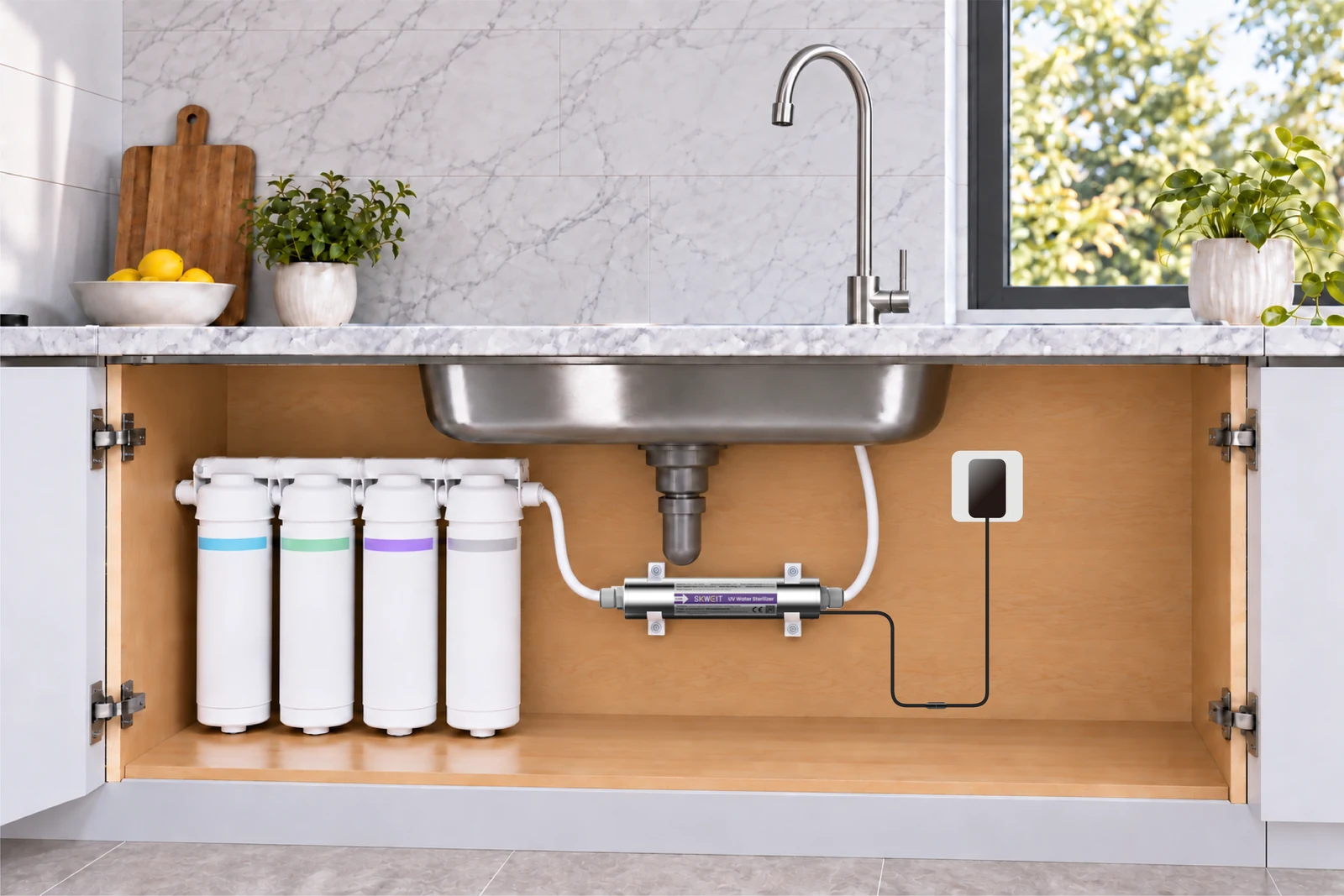
Case 2 · Under-sink drinking water
Where a dedicated drinking-water faucet is fed from a filtration set, the
run from the last filter to the faucet is short and the water in it stands between draws.
The constraints here are physical rather than chemical — cabinet space, tubing runs, and
whether there is a power outlet inside the cabinet at all.
Cabinet-mounted
Needs a nearby outlet
Case 3 · Private well supplies
A private well is the case where an ultraviolet stage is most often
specified for the wrong reason. It treats what passes the chamber; it does not remove iron,
manganese, sulphur or sediment, and those are what a well supply usually carries. This page
is about the order the stages have to go in.
Whole-supply point
Pre-treatment decides